Showing posts with label wurm. Show all posts

Saturday, 9 January 2010

Wurm vs Istaria: and the winner is... (part 4)


The world in which you play at MMO is a crucial part of the game for many reasons: immersion is an obvious one, as the look can be so important, but the way the worlds are set out and populated. For example, the look of World of Warcraft and Lord of the Rings Online is very different, with the former being very cartoony and the latter a little gritty, but they follow the same pretty dull format - you stay in an area for 10 levels or so, before being spoon-fed into the next which has resources and monsters of a slightly higher quality and level. So what about Istaria and Wurm?

The world
The World of Wurm isn't much to look at, but makes up for this with some really interesting ideas. If you've read my previous entries, you won't be surprised to hear it's a much tougher ride than you'll find in most MMOs.

For starters, you don't get an in-game map or compass (although you can make the latter, but it's not easy). Also, you have the fear of PVP attacks and the fact that creatures range from harmless to lethal with no real regularity. Together, these elements make for a game that constantly feels edgy and challenging.

The style is realistic, with rolling green hills, grey mountain ranges, blue seas and blue skies. As you'd expect there are no cheaty teleporters, so getting around can be a laborious affair. However, this adds to the realism and is in keeping with the rest of the game. Overall, the world of Wurm fits perfectly with the theme and other styles of the game.

Istaria does things very differently, but is equally open-ended. Like Wurm, once out of the starting area you can go anywhere in the world from the offset (with the exception of a few places you'll need to be a dragon to get to) and could easily walk around a corner into a battle you can't handle. The danger makes exploring exciting, and you never feel like you're being led in the way you do in WoW.

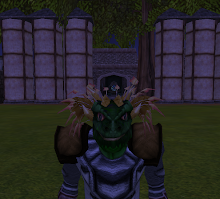
The world is really well drawn, with the skies being particularly impressive. There won't be any points for accurate geography, but who cares, really? It's a fantasy game after all. Istaria is far from hardcore - compass and map are built into the GUI, as in most other MMOs - but the map is basic, meaning you have to add your own points of interest such as resource and danger areas. You get some great effects in the wintery and lava areas, while the music works really well too. Overall, it's a pleasure to wander around the world.

And the winner (finally) is...
Istaria, 4-3. In conclusion, both are great games in their own way and if you're looking for an MMO that blends quality crafting with good combat, but with far from cutting edge graphics, you should check out the free areas of both these games.

Really, two things made me stay with Istaria over Wurm. The first was a failing of the latter, in that Wurm is just too demanding to be fun at times. I love the fact you have to make everything from the ground up, but things deteriorate too quicky meaning a lot of annoying repetition just to stay at an even keel, unless you intend to sink a ridiculous amount of hours into the game. Another example is food - you can spend an age foraging for food, but nothing you can make at low level does anything to sustain you at all - for me, it just doesn't feel like you are being rewarded for your hard work enough of the time.

Secondly, I just can't ignore the graphical superiority of Istaria in terms of graphics, as well as combat. If a game could have be much like Istaria but with the extra crafting and building depth of Wurm, it would be awesome - but I will happily give up that extra complexity on this occasion for a game that feels much more finished.

Istaria - www.istaria.com

Thursday, 7 January 2010

Wurm vs Istaria: and the winner is... (part 3)


Blogging regularly is harder than I thought it would be. It seems that whenever I get a break long enough to play a game, I have to write a blog instead! But which game would I play? Well, the answer will be on the blog after this. For today, I'll move on to...

Community
It's a huge part of the success of MMOs in general, and MMORPGs in particular, but can be a troublesome beast. Games that attract a lot of younger players can end up with a pretty annoying feel, while very popular games often have more than their fair share of griefers, cheats and gold sellers (people that try and sell in-game gold for RL money, which is normally banned by game publishers, but very hard to police).

Luckily, I don't really come across any of the standard community pitfalls with Istaria. The game has been around a long time now, and a lot of the players have been around since the start, despite the wealth of problems there have been along the way. Some people have noted that this makes it seem a bit cliquey to some new players, even impenetrable for others, but it sure beats constantly being spammed with messages either asking you for money or offering it to you from some dodgy website, as happens in some games.

The positive side of the old player base is they've seen it all, know how close the game has come to folding completely, so are always happy to see new faces. After all, the more new players that stay, the longer Istaria's stay of execution will continue! You should find that most players are happy to give advice, while others will help out with making equipment and other items.

One problem is that new players won't find an awful lot of people to group up with for combat, as there are precious few new players on at once. However, grouping certainly isn't necessary and there are plenty of hunting groups around when you get up a few levels. One of the great things about the levelling system is that you can group with people a lot higher or lower level than yourself, although this can have a big hit on experience gained. But it's not all about levelling up - fun is more important.

Wurm works a little differently. Dishonesty is almost encouraged, with the ability to steal and later kill other players being part and parcel of your existence (or death). However, this doesn't mean community is harmed - far from it. It's just different.

As I said about its crafting, Wurm looks to emulate reality in a lot of ways - its tough, things erode, nothing comes on a plate: this is hard middle ages living, fantasy game style. It can be a similar story with the community too. You'll find a lot less people ready give you something for nothing, but then again people will certainly talk and help you - for a price - but it's normally a fair one. For example, if you want a fishing line (quite tough to get your hands on when you start out, but very useful to get food) you can ask in the chat channels for it, but chances are someone will expect you to do some mining for them, or dig them some holes, before you get your precious line.

Wurm's area of local chat is restricted too, which adds a real feeling of foreboding when you exit your comfort zone. If you're in a well populated area, there will be a good list of people in your chat window and likely some banter. However, as you head further away, the number of players in the area dwindles and you can find yourself alone, of with just a few names you don't recognise. Those who play Eve will know this feeling all too well - it's a far cry from the friendly, laid back atmosphere in Istaria.

Overall, both games have very different communities but they're both great in their own way, so I'll again have to call this a score draw. Next up I'll look at the worlds themselves, and give one final score. So it's 3-2 to Istaria so far - can Wurm draw level? I'll let you know at the weekend.

Istaria - www.istaria.com

Monday, 4 January 2010

Wurm vs Istaria: and the winner is... (part 2)


OK, it isn't tomorrow... that's Christmas for you. Things went a bit nuts and suddenly it's January. Anyway, back to the review.

Crafting
This is a a trump suit for both games - it's a big part of what makes me return to Istaria every time and the thing that drew me to Wurm in the first place (along with the promise of a sandbox game).

These are two tricky games to compare as they take very different approaches to crafting. Wurm is about as hardcore as a game could get: crafting isn't an option, it's quite simply the only way to survive. You start out with a backpack full of tools and away you go: want a cart? Build it. Want a house? Build it. And when I say build, I mean from the ground up.

And it's really, really tough. Starving is a genuine problem, if it gets dark you simply can't see (unless you can build some sort of light source) and everything degrades - fast. Add this to pretty bad graphics and average sound, you might be thinking it's a write off. However, somehow, it's hugely compelling. You soon forget the mind-numbing dullness of the actual thing you're working on, because of the complexity and difficulty of the task. It's an odd feeling when you give out a "yes" and pump your fist at making a very poor quality weapon blade - only to then lose it when trying to fix it to the handle.

While I really enjoyed the challenge of the game (I could go into the fact that the game itself tells you next to nothing - you spend as much time asking advice and looking things up on the Wurmpedia as you do actually doing anything, which I loved) it does take it too far at times. For example, I built myself a lovely wooden shed to live in and have started surrounding it with a stone wall. This took a lot of time in itself, but the next day I had to repair everything - which again took ages. This becomes a bit annoying, to say the least, and if you're not going to invest a lot of hours in the game you're going to struggle. You can get around this to a point by grouping and joining up with a town, but as in any relationship, it's give and take - if you don't put in the work, others will lose faith in you.

Istaria is a much lighter crafting experience. Nothing degrades or breaks, and you can't fail to make an item - if you put the time in, you'll get what you wanted. The tough side can be getting hold of the materials: even at lower levels, some of the resources are in tricky areas so you may need some friends to hand or at least a few levels of adventurer training to get by.

The graphics are far better in Istaria, but that is paid for by a much less pliable world. The resources are always in the same place and you can only build in areas designated for the purpose - you buy a plot and build on it, or you work on a community project (or of course an item). In Wurm, you can go to bed with your house in a forest and wake up in a field with a road going by.

The processes are much simpler in Istaria too - instead, they are more repetitive. However, while much of the gathering process defines grinding, again it is strangely compelling. I think the reason for this is that you can often do it 'afk', which really appeals to me. Like Eve, where your character ticks over without you being there, it's the same kind of feeling: if you want crash bang wallop, you can put on your armour and fight stuff. If not, you can mine some ore while chatting.

Both games let you find a spot and build on it to your heart's content. One looks better, while the other is way more hardcore, but importantly both work really well. How games with vast budgets manage to screw crafting and house ownership up so badly compared to these much lower budget offerings amazes me.

In the end, I'm forced to call it a score draw on crafting. Both do a fantastic job of creating a crafting environment that feels worthwhile without forcing you into a crappy quest structure designed only to mask the pointlessness of what you're doing (hello World of Warcraft and Lord of the Rings!). Few other games have achieved this level of quality (arguably only Eve Online and the original incarnation of Star Wars Galaxies), so bravo. For anyone keeping score, that's 2-1 to Istaria. I'll look at community and extras next - and that may actually be tomorrow!

Istaria - www.istaria.com

Monday, 21 December 2009

Wurm vs Istaria: and the winner is... (part 1)


Well, if you want to know, you'll have to wait - I don't have time to write it all up in one go! I've broken the games down into pretty typical key areas (combat, crafting, community etc) and looked at my experience of the games. In fairness, I've only being playing Wurm for about a month, and Istaria for years, so I'll happily admit that there will be many depths of the former that I'm not yet aware of. However, a game either grabs you or it doesn't, so I feel justified in making my decisions based on my time played to date. Just take any comments on Wurm as what they are - a beginner's perspective.

Combat
This is quite a way from perfect in both games (although my guild mates in Istaria would question what I know about it, seeing as I craft all the time!).

Battles in Istaria can be fantastic. Fighting single creatures near to your level is usually challenging and certain creatures will heal each other and generally join in the fun if you're not careful. Groups are easy to set up, team combat is fun and despite some lag issues its a rewarding and fun experience. There is a strong array of combat classes; any MMO player should find a style they like to play. There is also a strong multi-classing element to the game, so it's also possible to mix things up if you want to. Creatures too have a strong range of abilities, similar to those players can use, so you'll often find the spells you're casting being used back on you! It's certainly better than many MMOs in this respect.

On the down side, the weakness of Istaria's creaking engine means creatures don't appear in an area until you arrive there and hang around for a few seconds. This can certainly make life interesting, but doesn't do anything for immersion. Also, due to the trouble the game has had with funding and staffing over the years, there aren't a whole heap of interesting quests to do. However, the nature of the game's economy and crafting system means that you'll often have a reason to go hutnig that doesn't need some poor quality fantasy novel idea to string it along: need some cool new armour? You'll have to go hunt for the tech items which drop from creatures. Need to build your new crafting station? Well you'd better take your sword, because those woods are full of treants and spiders.

At lower levels at least, Wurm's combat is quite simply awful. There are no creature animations (at all - not even movement. Things just kind of float towards you), no interesting moves, no nothing. It is painfully slow and in no way enjoyable - you simply choose which combat 'style' you are going to use (defensive, normal or aggressive) and stand there, hoping for the best. Yes, it really is that bad. Magic, ranged combat etc do come into the game later, but why anyone would still be bothering with combat in Wurm by then is beyond me.

In fairness, Wurm's combat does stay true to the game. It's hard from the off, meaning you will struggle to kill anything, even a cow. If you die your skills take a pretty big hit and you'll also find your weapon will degenerate quickly (not that it's much good to start with). You can run away pretty easily though, which was a surprise. It also fits well into the realism element of the game, with animals being used for skins and meat (and not dropping +1 swords).

Overall, an easy win for Istaria when it comes to combat (although I'd be interested to hear if Wurm's combat gets better at higher levels). I'll look at crafting tomorrow.

Istaria - www.istaria.com

Sunday, 13 December 2009

Wurm and Istaria: play them for free, forever (to a point)!


Keen readers (haha) of my blog will probably have spotted that of late I've been dabbling in two MMOs - Istaria and Wurm Online. However, seeing as I don't have enough free time to dedicate to one, let alone two, games, one had to go. So which was it and why? Well, before I tell you (in my next blog), did you know both games can be played for free, indefinitely, as long as you can take some pretty hefty restrictions? Scroll to the bottom for links to the official sites.

Istaria has a great policy which allows you to 'play for free, forever'. Yup, that's downloading the client and having access to the entire game world for free, as well as being able to level up all the way - as long as you're happy to be a human, with no plot of land to call your own, and have no other characters.

This means you get to really try out all aspects of the game except plot building and being a dragon. However, this isn't much of a loss as far as making your decision about the game - dragon play is very similar to biped play right up until the higher levels (where dragons get to fly). Plot building is great, but essentially uses crafting skills that you can do without actually building your own place.

Wurm is free in the initial 'n00b' area, but costs once you move out into the big wild world. This is a really nice idea, as the initial area is both massive and challenging, giving you a really good chance to get to know the game before deciding if you want to pay for the privilege.

Also, a lot of experienced players have a paid Wurm account as well as a free one, so they spend time in the free area to help and welcome new players to the game, with advice and opportunities to work for hard-to-get items and resources. It's another great example of how small game communities go the whole nine to help build the game's subscriber numbers.

It's pretty annoying that other games tend to give you a free time period to try out the game - this either assumes you have a week/month off to really get into the game, or that you're confident you will be able to make a good impression by then. In my experience it's not often the case - I often think I'm going to be able to play a good 10+ hours in a week (even a day!) but then real life comes along and scuppers you, meaning you get an hour at best (probably drunken and in the middle of the night).

Surely it would be better to give a set amount of free in-game hours, to level the playing field, or copy the great systems employed in both Wurm and Istaria. To get going in both games, check out the free play info here:


Thursday, 12 November 2009

Making a crafting game for fun and profit


When Istaria (then Horizons) launched in late 2003,things went downhill pretty fast after a decent amount of hype pre-launch. If nothing else, it proved their was a market for a certain type of game if done right – one where crafting was king.

What makes Istaria stand out (other than playable dragons) is the importance of crafting, both in terms of item building and community projects/player-owned plots. But like all MMOs seem to start out, the original team had a grand plan covering everything to player versus player (PvP) combat, but somewhat surprisingly – as release loomed – it was PvP that was shelved.

It's interesting to look at the pay monthly MMOs that have stuck around longest. Ultima Online (1997) was the first truly massive MMO, going over 100,000 subscribers, and has a good mix of crafting, property ownership and combat – both PvE (player versus environment, meaning the game's AI) and PvP. The same can be said of Eve from a sci-fi game perspective. Both should be applauded for squeezing it all in.

Like Istaria, Star Wars Galaxies and Ryzom also feature crafting as a truly important game mechanism. However, most other MMO stalwarts (EverQuest 1 & 2, Dark Age of Camelot, Final Fantasy, Anarchy Online, City of Heroes, World of Warcraft, Lord of the Rings Online) concentrate almost solely on combat. Sure, they all have crafting to some extent, but it could largely be withdrawn without having any serious affect on the overall outcome endgame.

Most people thought Istaria would fold, but while a string of combat orientated games perished, it hung in there. Star Wars Galaxies was hugely anticipated and an almost complete disaster. So little worked it wasn't even funny, but it's still going. Ryzom also had its problems, and a lot of people barely even noticed its arrival, but again a core of players stayed loyal. That these crafting games stayed afloat while many combat-centric ones perished is no coincidence – put simply, crafters hang around. So why hasn't someone really nailed this game mechanic?

It could be argued that games such as The Sims Online, A Tale in the Desert or even Second Life have, to a certain extent, taken chunks of this audience away. However, a great game where the emphasis was on community, combat and expansion through crafting could be a real hit.

Start at point A, which is surrounded by a hostile environment. Adventurers must keep the wildlife at bay, while crafters expand the parameters of the settlement – something akin to Harry Harrison's Deathworld books comes to mind. The larger the settlement becomes, the better technology is available, allowing for bigger and better items to be manufactured – but these need new structures and equipment to make them in, so more expansion is required. Being part of that would be amazing.

Playing a bit of Wurm Online the other day really made me wonder what could be done by a half decent dev team with a reasonable amount of cash to spend on a game that was aimed at a sizeable niche, instead of world domination. Wurm is Java based, can be played for free and looks bloody awful, but has more imagination in one of its badly rendered barrels than the recent slew of showy WoW-a-likes have in their wholly vacuous worlds.

Istaria doesn't give you the freedom Wurm does, or some of its other really hardcore sandbox aspects, but its still so far ahead of the competition in some crafting/world manipulation respects – six years after release – it's hard to believe.

Have a look at Istaria by heading to Istaria.com
You can check out Wurm Online at WurmOnline.com